

Important Dates
01 Aug, 2026
Call for Papers
11 Oct, 2026
Early Bird Offer
11 Nov, 2026
Event Date

October 2025
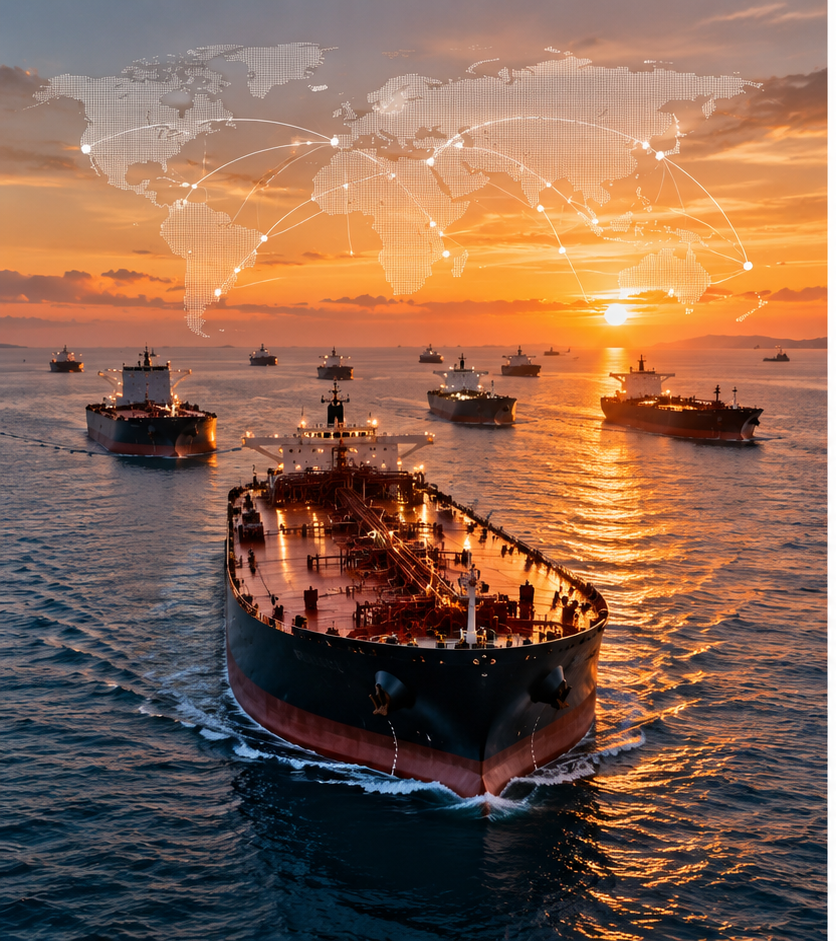
The global tanker industry is entering an era defined by volatility, rising costs, and growing sustainability pressures. Against this backdrop, big data and digital analytics are reshaping how shipowners and operators run their businesses. From optimizing speed to reducing fuel consumption, predictive maintenance, and real-time decision-making, data has become one of the most valuable assets for ensuring operational efficiency and profitability.
As the maritime sector adapts to regulatory demands, geopolitical uncertainty, and the global energy transition, the ability to harness and interpret big data is no longer a luxury—it’s a necessity.
Unlike other industries, the tanker sector operates in a highly complex environment. Vessels must navigate volatile freight rates, fluctuating bunker prices, unpredictable weather conditions, and shifting trade patterns. Decisions made in this environment can significantly impact costs and revenues.
Big data provides the visibility and insight required to manage these challenges in real time. By leveraging integrated data platforms, tanker operators can make informed decisions that directly improve profitability.
Speed Optimization: Unlocking Efficiency Gains
One of the most tangible benefits of big data in tanker shipping is speed optimization. By analyzing bunker prices, charter rates, vessel performance, and weather forecasts, analytics platforms can recommend the “sweet spot” for vessel speed.
This is not simply about slowing down to save fuel; it’s about identifying the optimal balance between voyage duration, charter agreements, and fuel costs.
Unplanned maintenance is one of the costliest challenges in tanker operations. When a vessel is sidelined, revenue is lost, schedules are disrupted, and repair costs rise. Big data allows operators to predict and prevent equipment failures before they occur.
According to industry studies, predictive maintenance can lower maintenance costs by 10–15% and reduce downtime by up to 45%.
In an industry under pressure to cut carbon intensity by 40% by 2030, voyage optimization is becoming a key tool for both compliance and profitability. Big data allows operators to plan voyages with unprecedented accuracy.
By combining these elements, operators can reduce both fuel consumption and carbon emissions, achieving efficiency gains that directly improve the bottom line.
While big data provides the raw material, AI and machine learning (ML) are the engines that unlock deeper value.
These innovations are already being adopted by forward-thinking shipowners, and adoption is expected to accelerate as digital transformation becomes mainstream.
Despite the clear benefits, the tanker industry faces hurdles in fully embracing big data:
However, as margins tighten and regulations intensify, resistance is giving way to necessity. The business case for big data is becoming too strong to ignore.
This case highlights how even incremental efficiency gains, when scaled across fleets, can deliver substantial financial returns.
In a competitive market, efficiency equals survival. Tanker companies that embrace digitalization and data analytics will gain:
As energy markets evolve and the tanker sector faces an uncertain future, big data will be a decisive factor in determining winners and losers.
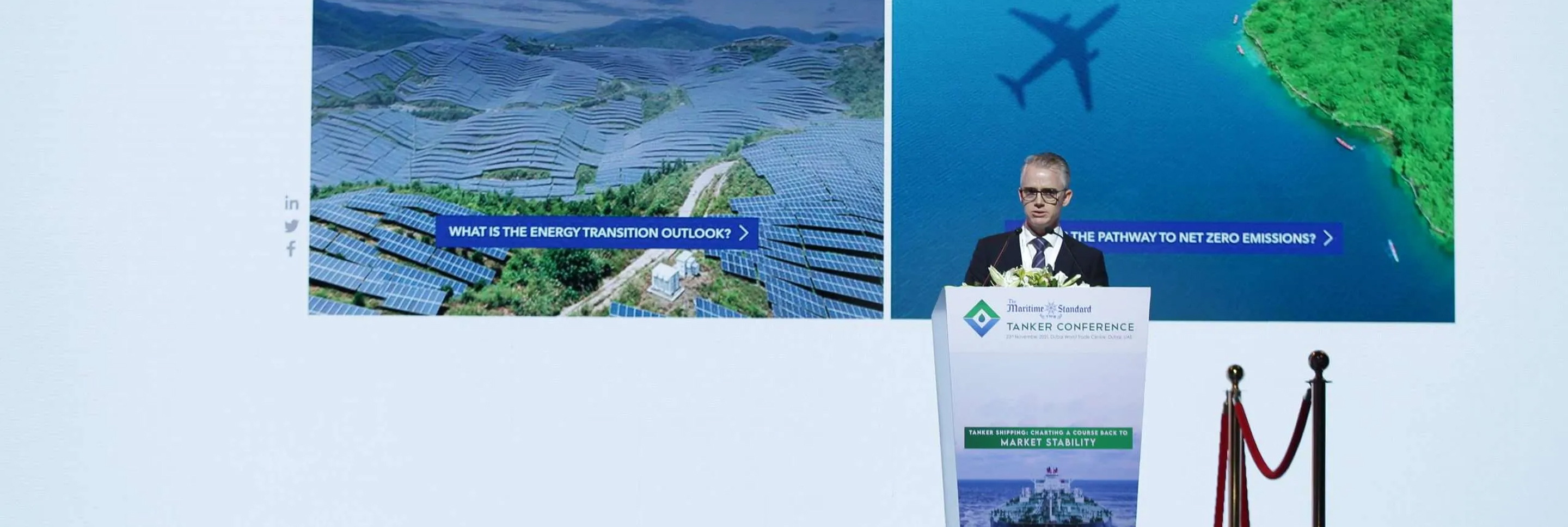
The role of big data in driving efficiency and profitability will be a central theme at the 10th Annual ‘The Maritime Standard Tanker Conference’, taking place on Thursday, 30 October 2025, at Atlantis, The Palm, Dubai.
Industry leaders, shipowners, charterers, and technology providers will share insights on how digital innovation is reshaping tanker operations. This is your chance to learn from pioneers, exchange best practices, and explore the tools that will define the industry’s next chapter.
Register Now to unlock the profit potential of your data and secure your competitive advantage.

Gold sponsor

Gold sponsor
Silver Sponsor

Lanyards and Badges
Multimedia sponsor
Multimedia sponsor

Delegate Lunch

Conference Registration

Silver Sponsor
Gold sponsor
Gold sponsor
Silver Sponsor
Lanyards and Badges
Multimedia sponsor
Multimedia sponsor
Delegate Lunch
Conference Registration
Silver Sponsor
Gold sponsor
Gold sponsor
Silver Sponsor
Lanyards and Badges
Multimedia sponsor
Multimedia sponsor
Delegate Lunch
Conference Registration
Silver Sponsor
Gold sponsor
Gold sponsor
Silver Sponsor
Lanyards and Badges
Multimedia sponsor
Multimedia sponsor
Delegate Lunch
Conference Registration
Silver Sponsor
Gold sponsor
Gold sponsor
Silver Sponsor
Lanyards and Badges
Multimedia sponsor
Multimedia sponsor
Delegate Lunch
Conference Registration
Silver Sponsor
Gold sponsor
Gold sponsor
Silver Sponsor
Lanyards and Badges
Multimedia sponsor
Multimedia sponsor
Delegate Lunch
Conference Registration
Silver Sponsor

Advance Polymer
Main Session

General Sponsor
Delegate Bags

Gulf Energy Marine
General Sponsor
General Sponsor
General Sponsor
Advance Polymer
Main Session
General Sponsor
Delegate Bags
Gulf Energy Marine
General Sponsor
General Sponsor
General Sponsor
Advance Polymer
Main Session
General Sponsor
Delegate Bags
Gulf Energy Marine
General Sponsor
General Sponsor
General Sponsor
Advance Polymer
Main Session
General Sponsor
Delegate Bags
Gulf Energy Marine
General Sponsor
General Sponsor
General Sponsor
Advance Polymer
Main Session
General Sponsor
Delegate Bags
Gulf Energy Marine
General Sponsor
General Sponsor
General Sponsor
Advance Polymer
Main Session
General Sponsor
Delegate Bags
Gulf Energy Marine
General Sponsor
General Sponsor
General Sponsor























Sign up for our newsletter to get the latest waves of updates, insights, and exclusive conference content.
Sign up for our newsletter to get the latest waves of updates, insights, and exclusive conference content.
© TMS Marine Conference 2026. Designed & Developed by Cheval
Back to Top