Important Dates
01 Aug, 2026
Call for Papers
11 Oct, 2026
Early Bird Offer
11 Nov, 2026
Event Date
October 2026
The Cost of Capital: How Financing Is Reshaping Tanker Shipping Investment
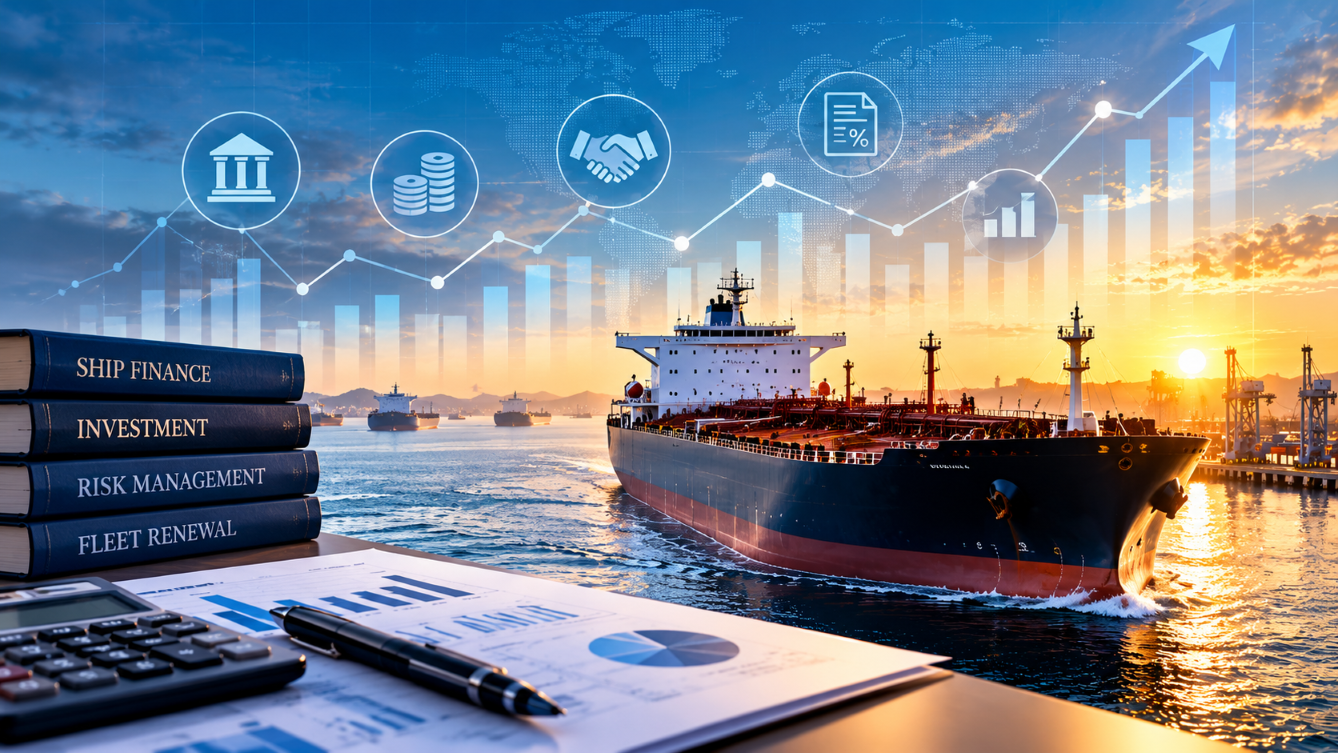
Interest rates, lender expectations and investment risk are influencing how shipowners fund fleet renewal, pursue growth and protect long-term returns. For tanker owners, investment decisions are increasingly shaped by more than freight rates, vessel prices and expectations of future demand.
The cost and availability of finance can determine whether a company expands its fleet, acquires second-hand tonnage, orders new vessels or postpones investment until market conditions become more favourable.
Shipping remains a capital-intensive industry in which investment decisions often extend across decades. A vessel may generate revenue for many years, but the financing structure used to acquire it can influence cash flow, flexibility and profitability throughout its commercial life.
In a market characterised by fluctuating earnings, changing trade patterns and evolving environmental requirements, the ability to secure appropriate financing has become an important source of competitive advantage.
The Changing Landscape of Ship Finance
Traditional bank lending continues to play a central role in shipping finance, but the range of funding options available to shipowners has expanded. Leasing companies, private credit providers, institutional investors, bond markets and other alternative sources of capital are becoming increasingly important.
Industry analysis published by Lloyd's List in July 2025 reported that global bank lending to shipping increased by 2% in 2024, while alternative financing sources were growing more quickly. Chinese leasing providers were among the competitors offering shipowners different financing structures and greater flexibility.
This diversification gives established operators more ways to structure acquisitions and fleet renewal. However, different financing arrangements carry different costs, repayment obligations, security requirements and levels of flexibility.
The lowest headline interest rate does not necessarily represent the most suitable financing option for every company. For tanker operators, the decision increasingly involves matching the financing structure to the vessel's expected trading life, charter arrangements, earnings potential and exposure to market volatility.
Matching Capital to the Tanker Market Cycle
Timing remains a critical consideration in tanker investment. Vessel prices, freight earnings and asset values can move at different speeds, creating opportunities as well as risks for owners. When earnings are strong, operators may be tempted to acquire additional tonnage or commit to newbuildings.
Yet high freight rates do not guarantee that favourable conditions will persist throughout a vessel's operating life. If market supply subsequently increases or demand weakens, a company that has borrowed heavily at elevated asset prices may find its financial flexibility constrained.
Conversely, delaying investment for too long can leave operators with ageing vessels, higher maintenance requirements or insufficient capacity to meet customer demand. Financing decisions therefore need to reflect a range of market scenarios rather than relying on a single earnings forecast.
Stress-testing debt repayments against lower freight rates, higher operating costs and weaker asset values can help owners assess how much financial risk they can reasonably accept.
A disciplined approach also requires distinguishing between investment that supports long-term commercial objectives and expansion driven primarily by short-term market optimism.
Alternative Financing and Greater Flexibility
The growth of alternative finance is changing how shipowners approach capital allocation. Private credit, leasing arrangements and capital-market instruments can provide alternatives when conventional bank facilities are unsuitable or insufficient.
According to a February 2026 analysis published by the Baltic Exchange, ship finance is undergoing structural changes as traditional lenders face evolving capital requirements and alternative providers compete through flexible financing structures.
For tanker companies, this broader financing market can create opportunities to diversify funding sources, manage repayment schedules and preserve liquidity for operational needs. Leasing may be attractive for certain fleet strategies, while revolving credit facilities can provide flexibility to established companies managing acquisitions, working capital and fleet renewal.
However, greater choice also increases the importance of understanding contractual terms. Owners must evaluate refinancing exposure, collateral requirements, restrictions on vessel sales, financial covenants and the implications of changes in market or regulatory conditions.
The objective is not simply to secure capital, but to build a financing structure that supports the company's strategy without creating unnecessary pressure on future cash flow.
Financing the Next Generation of Tankers
Environmental requirements add another dimension to tanker investment. Decisions about fleet renewal increasingly involve assessing vessel efficiency, future fuel options, retrofit potential and the risk that existing assets may become less competitive as regulations and customer expectations evolve.
Newer vessels and alternative-fuel-capable designs can require greater initial capital expenditure. Retrofitting an existing vessel may involve a lower upfront commitment, but the economics depend on its age, technical condition, remaining commercial life and the likely benefits of the proposed upgrades.
The financing challenge is to determine how these costs align with the vessel's expected earning potential. Owners must consider whether the investment can generate sufficient operating savings, improve chartering opportunities or reduce exposure to future compliance costs to justify the capital committed.
Sustainability-linked lending and other financing structures that incorporate environmental performance criteria may offer additional options for some operators.
Yet access to such capital does not remove the need for commercially sound investment decisions. A vessel's technical suitability, operating profile and anticipated demand remain central to the assessment. The energy transition also introduces uncertainty into long-term asset valuations.
Shipowners must consider how different fuel pathways, infrastructure availability and future regulation could influence a vessel's competitiveness over time.
Financial Resilience Beyond the Balance Sheet
A strong balance sheet can provide a tanker operator with greater flexibility during periods of market uncertainty. Companies with manageable debt, adequate liquidity and diversified funding sources may be better positioned to maintain operations, meet contractual obligations and take advantage of investment opportunities when market conditions change.
Financial resilience is not determined by borrowing levels alone. The structure and maturity of debt, the predictability of operating cash flow, charter coverage and the concentration of financial commitments all influence a company's ability to withstand disruption.
Refinancing risk also deserves attention.
A vessel that appears commercially viable under current financing terms may become more challenging to operate if borrowing costs rise or lenders tighten their requirements when existing facilities mature.
For this reason, treasury planning and fleet strategy should be closely aligned. Investment decisions need to account for the company's wider capital commitments, not just the economics of an individual vessel.
Capital Discipline as a Competitive Advantage
The next phase of tanker shipping will require owners to balance commercial opportunity with financial discipline. Fleet renewal, technological upgrades and expansion may create long-term value, but only when supported by realistic assumptions about earnings, operating costs, asset life and financing conditions.
Companies that evaluate capital expenditure alongside liquidity, debt capacity and market exposure can make more informed decisions about when to invest, which assets to acquire and how to fund growth. They can also preserve the flexibility needed to respond when market conditions depart from expectations.
As the tanker industry navigates changing trade flows, environmental requirements and evolving financing markets, access to capital will remain important. The more significant advantage, however, may lie in how effectively that capital is deployed.
In tanker shipping, competitive strength is not simply a question of how much a company can borrow or how quickly it can expand.
It is the ability to finance the right assets, on sustainable terms, at the right point in the market cycle.

Gold sponsor

Gold sponsor
Silver Sponsor

Lanyards and Badges
Multimedia sponsor
Multimedia sponsor
Delegate Lunch

Conference Registration

Silver Sponsor
Gold sponsor
Gold sponsor
Silver Sponsor
Lanyards and Badges
Multimedia sponsor
Multimedia sponsor
Delegate Lunch
Conference Registration
Silver Sponsor
Gold sponsor
Gold sponsor
Silver Sponsor
Lanyards and Badges
Multimedia sponsor
Multimedia sponsor
Delegate Lunch
Conference Registration
Silver Sponsor
Gold sponsor
Gold sponsor
Silver Sponsor
Lanyards and Badges
Multimedia sponsor
Multimedia sponsor
Delegate Lunch
Conference Registration
Silver Sponsor
Gold sponsor
Gold sponsor
Silver Sponsor
Lanyards and Badges
Multimedia sponsor
Multimedia sponsor
Delegate Lunch
Conference Registration
Silver Sponsor
Gold sponsor
Gold sponsor
Silver Sponsor
Lanyards and Badges
Multimedia sponsor
Multimedia sponsor
Delegate Lunch
Conference Registration
Silver Sponsor
Advance Polymer

Main Session

General Sponsor
Delegate Bags

Gulf Energy Marine
General Sponsor
General Sponsor
General Sponsor
Advance Polymer
Main Session
General Sponsor
Delegate Bags
Gulf Energy Marine
General Sponsor
General Sponsor
General Sponsor
Advance Polymer
Main Session
General Sponsor
Delegate Bags
Gulf Energy Marine
General Sponsor
General Sponsor
General Sponsor
Advance Polymer
Main Session
General Sponsor
Delegate Bags
Gulf Energy Marine
General Sponsor
General Sponsor
General Sponsor
Advance Polymer
Main Session
General Sponsor
Delegate Bags
Gulf Energy Marine
General Sponsor
General Sponsor
General Sponsor
Advance Polymer
Main Session
General Sponsor
Delegate Bags
Gulf Energy Marine
General Sponsor
General Sponsor
General Sponsor

















Sign up for our newsletter to get the latest waves of updates, insights, and exclusive conference content.
Sign up for our newsletter to get the latest waves of updates, insights, and exclusive conference content.
© TMS Marine Conference 2026. Designed & Developed by Cheval
Back to Top