


Important Dates
01 Aug, 2026
Call for Papers
11 Oct, 2026
Early Bird Offer
11 Nov, 2026
Event Date

October 2026
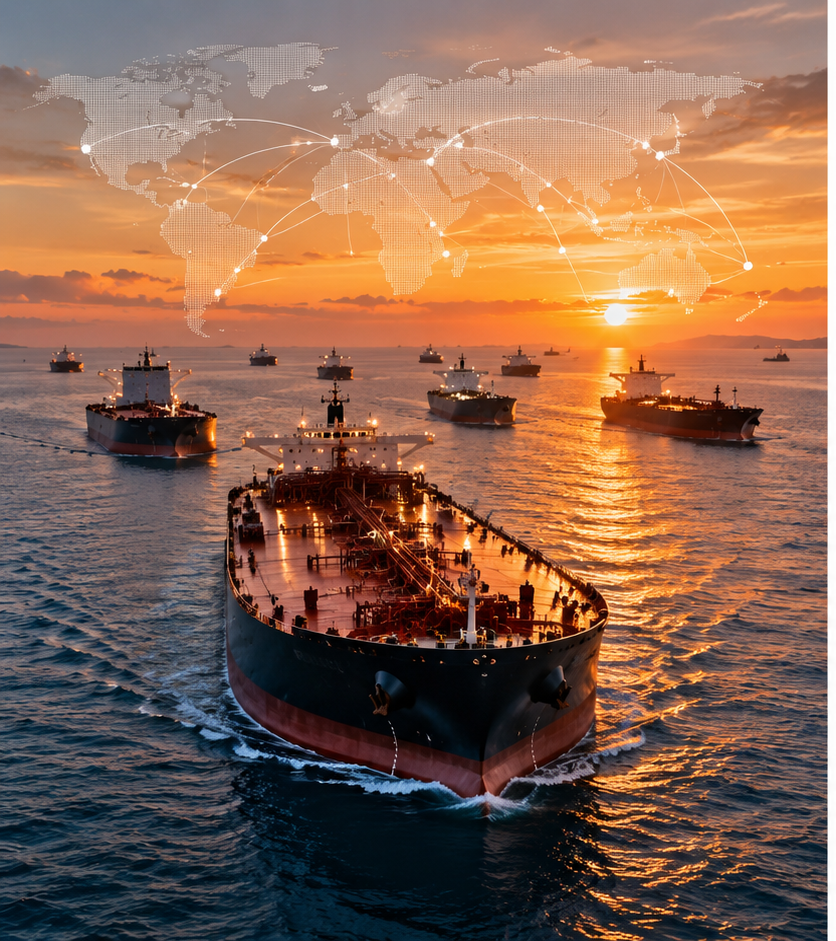
Beyond Fleet Size: The Hidden Capacity Dynamics Shaping Tanker Markets
Why the number of vessels in the global fleet does not always tell the full story about tanker supply The size of the global tanker fleet is one of the most closely watched indicators in shipping. Newbuildings, deliveries, scrapping and the orderbook all provide important clues about the balance between vessel supply and cargo demand.
Yet fleet size alone does not necessarily reveal how much tanker capacity is actually available to the market. A vessel can be part of the global fleet without being immediately available to carry another cargo. Port congestion, longer voyages, rerouting, maintenance, inspections, repositioning and delays can all reduce the effective availability of tonnage.
In periods of heightened disruption, these factors can become increasingly important in determining freight market conditions. This creates a distinction between nominal fleet capacity and effective fleet capacity. The first is based largely on the number and size of vessels in service. The second reflects how much carrying capacity is genuinely available, where it is located and how quickly it can be redeployed.
When Fleet Growth Does Not Mean More Available Tonnage
A growing fleet would normally suggest greater carrying capacity. However, the relationship between fleet growth and effective supply is not always straightforward. A tanker completing a long voyage between distant trading regions may be unavailable for another cargo for an extended period.
Similarly, a vessel waiting at an anchorage, undergoing repairs or repositioning between markets is temporarily removed from the pool of immediately available tonnage. This means that even when the fleet expands, the amount of capacity available to charterers at a particular location can remain relatively tight.
The distinction is particularly relevant when demand patterns change quickly. A vessel may be available globally, but not necessarily in the right location at the right time. Positioning therefore becomes an important component of effective supply.
Longer Voyages Can Absorb More Ships
Changes in trading patterns can have a significant effect on fleet requirements. When cargo moves over longer distances, the vessel spends more time at sea. The same tanker may therefore complete fewer voyages within a given period, even if the volume of cargo being transported has not increased substantially.
This is one reason why tanker markets are influenced not only by cargo volumes, but also by the distance between loading and discharge points. A shift towards longer-haul trades can effectively absorb additional vessel capacity. For owners, this can support stronger utilisation and freight earnings.
For charterers, it can mean greater competition for available ships, particularly in regions where vessel supply is already constrained.
Rerouting Changes the Supply Equation
Geopolitical developments and security concerns can also alter effective tanker capacity. When established routes become more difficult or risky to navigate, vessels may be diverted towards longer alternatives.
The additional sailing time can reduce the frequency with which individual ships return to the market for their next cargo. This does not necessarily mean that vessels have disappeared from the global fleet. Rather, their capacity is being consumed for longer periods by individual voyages.
The result can be a tightening of available tonnage even when the underlying fleet has not changed significantly.
Port Delays Can Become a Hidden Capacity Constraint
The amount of time a tanker spends at sea is only part of the equation. Time spent waiting to load or discharge can also influence effective capacity. Congestion, berth availability, weather, inspections, documentation and operational constraints can all extend port stays.
When delays become widespread, they reduce the number of voyages vessels can complete within a given period. For individual owners, the impact can be measured through lost utilisation. At a market level, the combined effect can become more significant.
A fleet experiencing longer turnaround times effectively provides fewer voyages to the market, even though the number of vessels remains unchanged.
The Location of Tonnage Matters
Global fleet statistics can also conceal regional imbalances. A tanker positioned in one trading basin may not be an immediate solution for cargo demand in another. Moving the vessel into position takes time and incurs additional costs. As a result, the geographical distribution of available tonnage can be just as important as the overall size of the fleet.
This is particularly relevant in markets where cargo programmes are concentrated within specific regions. A shortage of vessels in one area can coexist with relatively comfortable supply elsewhere. For charterers, therefore, the relevant question is often not simply how many tankers exist, but how many suitable vessels are available within the required trading window.
The Role of Maintenance and Fleet Availability
Fleet supply is also affected by vessels temporarily leaving commercial service. Scheduled drydockings, repairs, surveys and retrofits are necessary parts of vessel lifecycle management. As fleets age, maintenance requirements can become increasingly important.
At the same time, investment in energy efficiency and emissions-reduction technologies can require vessels to spend additional time out of service. These periods may be relatively short when considered individually, but their combined effect across a large fleet can influence the amount of tonnage available at any particular point in the market cycle.
This adds another layer to the supply equation. Fleet growth needs to be considered alongside fleet age; maintenance requirements and the amount of time vessels are commercially unavailable.
The Importance of Effective Fleet Productivity
For tanker owners, the focus is increasingly shifting towards how effectively each vessel contributes to fleet performance. A vessel completing more productive voyages, spending less time idle and positioning efficiently between cargoes can generate greater commercial value without any increase in fleet size.
Conversely, a larger fleet can deliver less effective capacity if vessels spend significant periods waiting, repositioning, undergoing maintenance or undertaking lengthy voyages. This makes fleet productivity an increasingly important consideration alongside traditional measures such as deadweight capacity and vessel numbers.
A More Nuanced View of Tanker Supply
The tanker market is ultimately shaped by the interaction between cargo demand and available vessel capacity. But available capacity is more complicated than simply counting ships. Fleet size remains an essential indicator. Newbuilding deliveries and demolition trends will continue to influence the long-term supply outlook.
However, short- and medium-term market conditions can also be shaped by factors that determine how quickly and efficiently that fleet can actually serve cargo demand. Voyage distances, routing decisions, port turnaround times, regional positioning, maintenance schedules and operational disruptions can all affect effective supply.
This means that the tanker market can tighten even without a sudden increase in cargo demand or a reduction in the physical fleet.
Looking Beyond the Fleet Count
As tanker shipping navigates a period of changing trade patterns, geopolitical uncertainty, evolving energy flows and continued fleet investment, understanding effective capacity will become increasingly important. The central question for market participants is no longer simply how many tankers are available globally.
It is how much suitable capacity is available, where it is positioned, how quickly it can reach the cargo and how many productive voyages it can complete. For owners, this provides an opportunity to focus on fleet productivity, positioning and commercial flexibility.
For charterers, it highlights the importance of understanding regional availability and potential disruptions to vessel supply.
Ultimately, the next phase of tanker market analysis may depend as much on how the fleet is being used as on how large the fleet has become.

Gold sponsor

Gold sponsor

Silver Sponsor

Lanyards and Badges
Multimedia sponsor

Multimedia sponsor

Delegate Lunch

Conference Registration

Silver Sponsor
Gold sponsor
Gold sponsor
Silver Sponsor
Lanyards and Badges
Multimedia sponsor
Multimedia sponsor
Delegate Lunch
Conference Registration
Silver Sponsor
Gold sponsor
Gold sponsor
Silver Sponsor
Lanyards and Badges
Multimedia sponsor
Multimedia sponsor
Delegate Lunch
Conference Registration
Silver Sponsor
Gold sponsor
Gold sponsor
Silver Sponsor
Lanyards and Badges
Multimedia sponsor
Multimedia sponsor
Delegate Lunch
Conference Registration
Silver Sponsor
Gold sponsor
Gold sponsor
Silver Sponsor
Lanyards and Badges
Multimedia sponsor
Multimedia sponsor
Delegate Lunch
Conference Registration
Silver Sponsor
Gold sponsor
Gold sponsor
Silver Sponsor
Lanyards and Badges
Multimedia sponsor
Multimedia sponsor
Delegate Lunch
Conference Registration
Silver Sponsor

Advance Polymer

Main Session

General Sponsor
Delegate Bags

Notepads and Pens

General Sponsor

Official Admission Pass
General Sponsor

General Sponsor
Advance Polymer
Main Session
General Sponsor
Delegate Bags
Notepads and Pens
General Sponsor
Official Admission Pass
General Sponsor
General Sponsor
Advance Polymer
Main Session
General Sponsor
Delegate Bags
Notepads and Pens
General Sponsor
Official Admission Pass
General Sponsor
General Sponsor
Advance Polymer
Main Session
General Sponsor
Delegate Bags
Notepads and Pens
General Sponsor
Official Admission Pass
General Sponsor
General Sponsor
Advance Polymer
Main Session
General Sponsor
Delegate Bags
Notepads and Pens
General Sponsor
Official Admission Pass
General Sponsor
General Sponsor
Advance Polymer
Main Session
General Sponsor
Delegate Bags
Notepads and Pens
General Sponsor
Official Admission Pass
General Sponsor
General Sponsor











































Sign up for our newsletter to get the latest waves of updates, insights, and exclusive conference content.
Sign up for our newsletter to get the latest waves of updates, insights, and exclusive conference content.
© TMS Marine Conference 2026. Designed & Developed by Cheval
Back to Top