
Important Dates
01 Aug, 2026
Call for Papers
11 Oct, 2026
Early Bird Offer
11 Nov, 2026
Event Date
September 2026
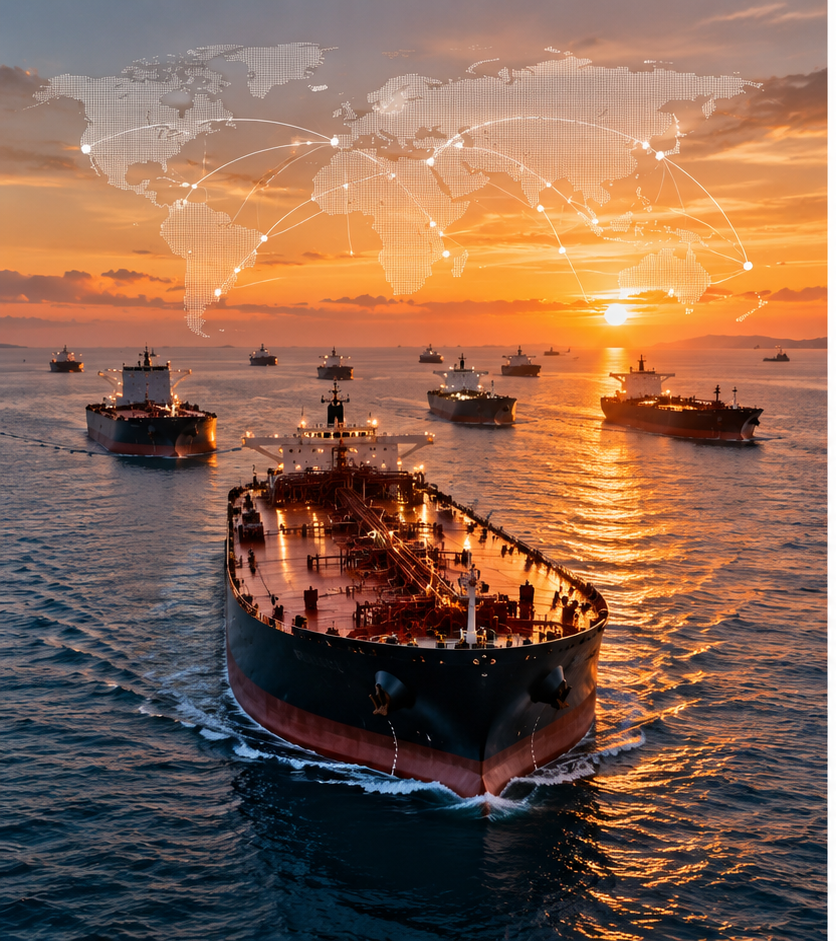
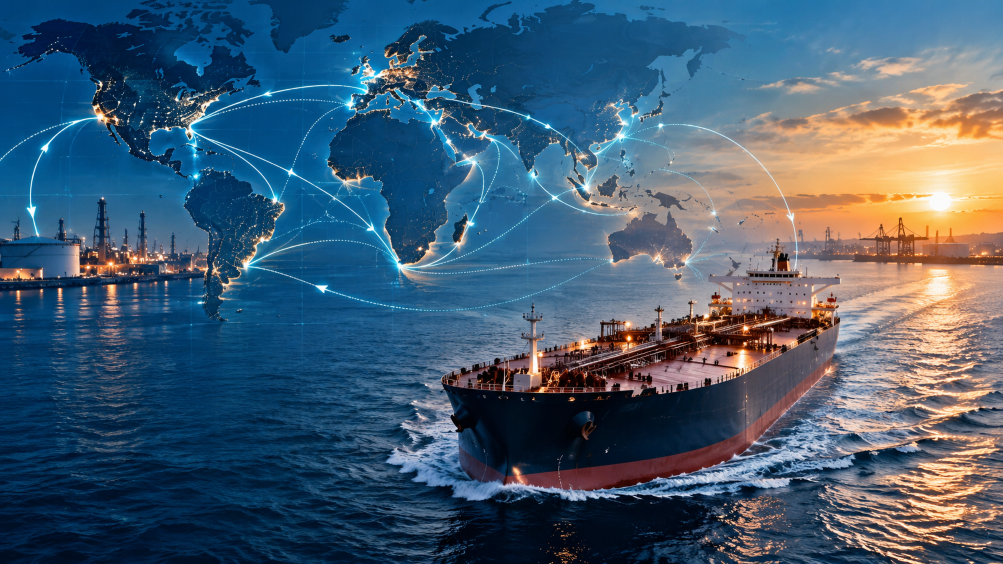
The Tonne-Mile Shift: How Changing Trade Routes Are Redefining Tanker Demand
For tanker shipping, the number of barrels moving through global markets tells only part of the story. The distance those barrels travel can be equally important.
A barrel transported across a relatively short regional route requires considerably less tanker capacity than the same barrel moved across an ocean. This is why tonne-mile demand has become such an important measure of tanker market fundamentals.
Changes in supply sources, refinery locations, export infrastructure and trading patterns can alter vessel demand even when the total volume of oil being transported changes only modestly. In 2026, that relationship is becoming particularly visible.
Disruptions to traditional energy routes have forced traders and refiners to reconsider sourcing patterns, while changes in refinery output are altering the movement of refined products. The result is a tanker market in which where cargoes move may be becoming as important as how much cargo moves.
The geography of oil is changing
The global oil trade has always been shaped by geography. Producers tend to supply nearby refining centres where economics and infrastructure allow, while major trading hubs connect regions with different supply and demand balances. But disruptions to established routes can quickly change those calculations.
The IEA reported in July that global refinery runs were expected to decline by 2.4 million barrels per day in 2026 before rebounding by 3.1 million barrels per day in 2027. It also highlighted how disruptions to Gulf production and refining were creating new trade flows and forcing refiners in other regions to adjust their supply strategies.
For tankers, these changes create two opposing effects.
A reduction in cargo volumes can reduce vessel demand. But when remaining cargoes have to travel significantly farther, the additional voyage distance can offset some of that decline. This is the essence of the tonne-mile equation.
Fewer barrels can still mean more tanker work The relationship is particularly clear in crude shipping. When a refinery switches from a nearby supplier to a more distant source, the volume of crude consumed may not change, but the transportation requirement does.
For example, a refinery traditionally supplied from a nearby producing region could instead source crude from the Atlantic Basin. The additional sailing distance means the same number of barrels occupies tanker capacity for longer. This can increase vessel utilisation and tighten effective availability.
Recent market analysis has identified precisely this dynamic in the crude tanker market.
Alternative supply routes involving the Americas and Black Sea have increased tonne-mile demand for some crude tanker segments, even as overall trade patterns have been disrupted. The implication for owners is important.
Cargo volume and vessel demand cannot always be expected to move in the same direction.
Refinery geography is becoming a tanker-market variable
Refineries are at the centre of this equation. Where crude is processed determines where refined products originate. Where refining capacity is added, reduced or disrupted can therefore influence both crude and product tanker flows.
The recent expansion of refining capacity in regions such as West Africa provides a useful illustration. Nigeria's Dangote refinery has reduced West Africa's dependence on imported refined products. S&P Global reported that West African clean-product imports fell 23% between April and May 2026 as the refinery increased its contribution to regional supply.
The change has consequently altered tanker flows and reduced product tanker tonne-mile demand in the region. This demonstrates a structural point for tanker operators. A new refinery is not automatically positive for tanker demand. It can increase crude imports while reducing imports of finished products.
The net effect depends on where the feedstock comes from, where the products are consumed and how far each cargo travels.
Crude and product tankers are increasingly diverging
This distinction is becoming particularly important in today's market. Crude and product tanker fundamentals can move in opposite directions because they respond to different parts of the energy supply chain.
Recent research from Affinity showed crude tanker tonne-miles growing year on year in July 2026, while product tanker tonne-miles declined 24%. The report attributed much of the product tanker weakness to reduced flows from the Arabian Gulf and lower refinery-related volumes.
S&P Global similarly reported in September that longer routes and expanded shuttle operations were supporting clean tanker movements around disrupted Gulf flows but warned that the expanding fleet could create a different supply-demand balance as new vessels enter the market.
For owners, this makes segment selection increasingly important. The market cannot simply be described as "strong tanker demand" or "weak tanker demand". VLCCs, Suezmaxes, Aframaxes, LR2s, LR1s and MRs can experience very different conditions depending on where cargoes originate and where they are ultimately consumed.
The distance factor can reshape fleet economics Longer voyages have another consequence:
they effectively remove vessels from the immediately available fleet for longer periods.
A ship completing a 60-day round voyage cannot perform as many voyages during a year as a ship operating on a much shorter route. When enough cargoes shift from short haul to long-haul trades, the industry may therefore require additional tonnage even without a corresponding increase in global oil consumption.
This is one reason tonne-mile growth can become a crucial support for freight markets. It also explains why changes in routing a greater impact on tanker utilisation can sometimes have than headline cargo volumes suggest. But longer routes are not always enough There is an important counterargument.
Longer voyages only support tanker demand when sufficient cargoes remain available to fill those voyages. If refinery closures reduce product exports significantly, simply moving the remaining cargoes farther may not fully compensate for the loss of volumes.
This is particularly relevant to product tankers. Affinity's August research estimated that global refinery capacity losses had significantly reduced LR2 and LR1 tonne-mile demand, while S&P Global reported that product tanker freight performance was being affected by the collapse in Persian Gulf refined-product flows.
This creates a more complicated market equation in which distance, volume and fleet supply must be considered together.
Trade routes are becoming strategic assets
For tanker companies, understanding trade routes is therefore becoming more important than simply monitoring individual loading regions.
Owners and operators increasingly need to understand:
These factors can influence fleet deployment, chartering decisions, positioning and investment strategy.
A vessel positioned in the wrong region can lose valuable days repositioning, while one already aligned with a developing trade can benefit from changing cargo patterns.
What happens when trade flows normalise?
One of the biggest questions for tanker markets is whether today's longer routes will become permanent. Some changes may prove temporary.
If disrupted infrastructure returns to service and traditional trade corridors reopen, cargoes could return to shorter routes. That would reduce voyage distances and potentially release effective tanker capacity back into the market. Other changes could prove more durable.
New refining capacity altered supplier relationships, infrastructure investment and changes in energy security strategies can permanently modify trade patterns. The distinction will be important for fleet planning.
Owners ordering vessels today need to consider not only expected cargo volumes but also how the geography of those cargoes could look when new ships are delivered.
A new way of reading tanker demand
The tanker market has traditionally been watched through indicators such as oil demand, production, fleet growth and freight rates. Those indicators remain essential.
But in a market experiencing rapid changes in supply routes and refining geography, tonne-miles provide another critical lens. A decline in cargo volumes does not necessarily translate into an equivalent decline in vessel demand. Conversely, strong cargo volumes do not guarantee strong tanker earnings if the fleet expands faster than transportation requirements.
The key is the relationship between cargo volume, voyage distance and available tonnage. That relationship is becoming increasingly important as the tanker industry enters a period of changing trade flows, evolving refinery geography and significant fleet expansion.
For tanker owners and operators, the next phase of market performance may therefore depend less on simply counting barrels and more on understanding where those barrels are going, how far they have to travel and how many ships are required to move them.
In an increasingly reconfigured oil market, the map of trade is becoming just as important as the volume of trade.

Gold sponsor
Gold sponsor
Silver Sponsor

Lanyards and Badges
Multimedia sponsor
Multimedia sponsor
Delegate Lunch

Conference Registration

Silver Sponsor
Gold sponsor
Gold sponsor
Silver Sponsor
Lanyards and Badges
Multimedia sponsor
Multimedia sponsor
Delegate Lunch
Conference Registration
Silver Sponsor
Gold sponsor
Gold sponsor
Silver Sponsor
Lanyards and Badges
Multimedia sponsor
Multimedia sponsor
Delegate Lunch
Conference Registration
Silver Sponsor
Gold sponsor
Gold sponsor
Silver Sponsor
Lanyards and Badges
Multimedia sponsor
Multimedia sponsor
Delegate Lunch
Conference Registration
Silver Sponsor
Gold sponsor
Gold sponsor
Silver Sponsor
Lanyards and Badges
Multimedia sponsor
Multimedia sponsor
Delegate Lunch
Conference Registration
Silver Sponsor
Gold sponsor
Gold sponsor
Silver Sponsor
Lanyards and Badges
Multimedia sponsor
Multimedia sponsor
Delegate Lunch
Conference Registration
Silver Sponsor

Advance Polymer
Main Session

General Sponsor
Delegate Bags

Notepads and Pens

General Sponsor

Official Admission Pass
General Sponsor

General Sponsor
Advance Polymer
Main Session
General Sponsor
Delegate Bags
Notepads and Pens
General Sponsor
Official Admission Pass
General Sponsor
General Sponsor
Advance Polymer
Main Session
General Sponsor
Delegate Bags
Notepads and Pens
General Sponsor
Official Admission Pass
General Sponsor
General Sponsor
Advance Polymer
Main Session
General Sponsor
Delegate Bags
Notepads and Pens
General Sponsor
Official Admission Pass
General Sponsor
General Sponsor
Advance Polymer
Main Session
General Sponsor
Delegate Bags
Notepads and Pens
General Sponsor
Official Admission Pass
General Sponsor
General Sponsor
Advance Polymer
Main Session
General Sponsor
Delegate Bags
Notepads and Pens
General Sponsor
Official Admission Pass
General Sponsor
General Sponsor



























Sign up for our newsletter to get the latest waves of updates, insights, and exclusive conference content.
Sign up for our newsletter to get the latest waves of updates, insights, and exclusive conference content.
© TMS Marine Conference 2026. Designed & Developed by Cheval
Back to Top