Important Dates
01 Aug, 2026
Call for Papers
11 Oct, 2026
Early Bird Offer
11 Nov, 2026
Event Date
September 2026
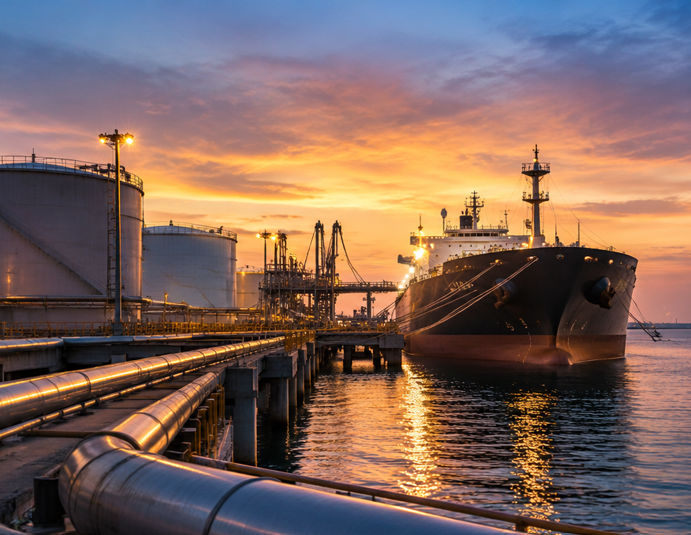
The Terminal Factor: How Ports and Storage Are Reshaping Tanker Performance
For much of the tanker industry's history, commercial attention has naturally centred on the vessel itself. Freight rates, fleet size, fuel consumption, technical performance and chartering decisions have traditionally dominated discussions about tanker competitiveness.
But the performance of a tanker does not begin or end at sea. A vessel can be commercially well positioned and technically efficient, yet spend days waiting for a berth, encounter restrictions at a loading terminal, face delays in cargo handling or be affected by limited storage availability.
These factors can alter voyage economics, disrupt schedules and reduce effective vessel utilisation. As global energy trade becomes more complex, the infrastructure surrounding tanker shipping is becoming increasingly important.
Ports, terminals, storage facilities, pipelines and connecting logistics networks are emerging as critical components of tanker performance. Recent market disruptions have made this relationship particularly visible.
In August 2026, Reuters reported that tankers in Venezuela were waiting for as long as 30 days to load crude because ageing port infrastructure could not keep pace with export activity. The situation highlighted how limitations on the shore side can constrain maritime trade even when cargo is available.
The lesson extends well beyond any single market: the efficiency of the tanker is increasingly dependent on the efficiency of the infrastructure around it.
The port is part of the voyage
A tanker voyage is often measured from one loading point to a discharge point, but the commercial reality is more complicated. Before a vessel begins its voyage, it must secure a berth, complete cargo operations and comply with terminal requirements. At the destination, the process is repeated.
Every additional hour spent waiting can affect vessel utilisation, cargo schedules and the availability of the ship for its next employment. This makes port turnaround a commercial variable, not simply an operational one. A vessel that completes its cargo operation efficiently can return to the market sooner.
A vessel delayed by congestion or terminal constraints may effectively lose earning days without travelling any additional distance. The impact can become even more significant when disruption affects several vessels simultaneously. A queue at a major terminal can create delays that cascade through subsequent voyages, repositioning decisions and chartering schedules.
For tanker owners and operators, understanding terminal performance is therefore becoming an increasingly important part of fleet planning.
Storage is becoming a strategic variable
The relationship between tankers and storage is equally important. Oil and petroleum products do not necessarily move directly from production facilities to final consumers. Storage terminals can provide flexibility between production, refining, trading and consumption.
They allow cargoes to be accumulated, blended, redirected or held until market conditions are more favourable. This flexibility can influence tanker demand.
When inventories are low, buyers may need to replenish stocks, potentially generating additional seaborne movements. When inventories are high, imports can slow even if underlying consumption remains stable.
Shipping Analytics identified inventory movements and the potential for a future restocking cycle as important factors for tanker demand in 2026. Its July analysis noted that continued inventory drawdowns could eventually create an additional tonne-mile catalyst if buyers move to rebuild stocks.
For tanker operators, this means that storage levels can provide an important signal about future cargo flows. The tank farm is therefore not simply a destination for cargo. It can influence when, where and how much cargo moves by sea.
Infrastructure can reshape trade routes
Changing trade patterns also increase the importance of infrastructure. When established routes become less reliable or less commercially attractive, alternative ports, pipelines, storage facilities and transshipment points can gain strategic importance.
This is particularly relevant to the tanker market because changes in routing can affect voyage distance and therefore tonne-mile demand.
The disruption to Gulf shipping in 2026 has already prompted investment discussions around alternative infrastructure. Reuters reported in August that Gulf states were accelerating investment in ports and pipeline infrastructure designed to diversify export routes and reduce dependence on vulnerable chokepoints.
For tanker shipping, such developments can have long-term consequences. A new terminal or expanded storage facility can change the economics of a trade route. Pipeline connectivity can alter the location from which crude reaches a port.
Expanded loading capacity can support larger vessels or increase the volume of cargo moving through a particular hub. Infrastructure investment can therefore gradually reshape the tanker network itself. Bigger ships need capable terminals The evolution of tanker fleets also places greater demands on ports and terminals.
The growing importance of VLCCs and other large vessels makes factors such as channel depth, berth dimensions, loading rates, shore-side pumping systems and storage capacity increasingly relevant. A port may have substantial cargo availability but still be unable to handle certain vessel classes efficiently.
This creates a potential mismatch between fleet capability and infrastructure capability. For shipowners, a modern vessel can deliver greater efficiency at sea, but those advantages may be reduced if the vessel is repeatedly constrained by terminals that cannot accommodate its size or operate at the required efficiency.
Fleet planning must therefore take infrastructure into account.
The question is not simply whether a vessel is technically competitive. It is whether the vessel can operate efficiently across the network in which it is expected to trade.
Terminal efficiency and the demurrage equation
One of the clearest commercial connections between infrastructure and tanker performance can be seen through waiting time.
When vessels spend longer than expected in port, the consequences can extend beyond lost operating time. Delays can lead to additional costs, affect subsequent fixtures and create disputes over contractual responsibilities. Demurrage exists partly because time has economic value in shipping.
The longer a vessel remains tied up beyond the agreed operational window, the greater the commercial consequences can become. This makes investment in terminal efficiency valuable not only for ports and cargo owners but also for shipowners and charterers. Faster cargo handling, better berth planning, improved coordination and more accurate arrival information can help reduce uncertainty throughout the chain.
Digital connectivity can improve the shore-to-ship interface
Technology is also changing the relationship between vessels and terminals. Better data exchange can improve communication around estimated times of arrival, berth availability, cargo readiness and operational requirements. Predictive tools can help operators anticipate congestion and adjust voyage plans accordingly.
For tanker operators already investing in digital fleet management, the next opportunity is greater integration between the vessel and the infrastructure it uses. A ship operating with sophisticated onboard systems is only partially digitalised if critical information from the terminal remains fragmented or arrives too late to influence decisions.
Greater connectivity between shipowners, charterers, ports, terminals and cargo interests could improve planning and reduce avoidable waiting time. This does not mean that every port needs to become fully automated. It means that better information can help synchronise the physical movement of ships and cargo.
Resilience begins on shore as well as at sea
The tanker industry's focus on operational resilience has traditionally centred on vessels, crews, machinery, safety and contingency planning. That definition is becoming broader.
A resilient tanker supply chain also needs reliable terminals, sufficient storage, alternative routes, dependable pipelines and the ability to respond when infrastructure is disrupted. The events of 2026 have demonstrated how quickly changes in regional infrastructure and maritime access can affect tanker operations.
Reuters reported that changing risks around the Strait of Hormuz, Red Sea and other routes have contributed to waiting time, disrupted flows and fleet repositioning. This creates a stronger case for looking at resilience across the entire energy logistics chain rather than treating the vessel as an isolated asset.
For owners and charterers, this could mean incorporating terminal reliability and infrastructure exposure more systematically into voyage planning and commercial decisions.
The competitive value of connectivity
The most efficient tanker operation in the future may not necessarily be the one with the lowest vessel operating cost. It may be the one that can move cargo through the wider network with the least friction. That requires coordination between ships, ports, terminals, storage facilities, pipelines, traders and cargo owners.
Integrated maritime and logistics platforms are well positioned to benefit from this approach because they can connect different parts of the supply chain and make decisions across a broader operating environment. For independent shipowners and charterers, understanding these connections can be equally valuable.
Knowing which terminals offer reliable turnaround, which ports have sufficient infrastructure for particular vessel classes and where storage capacity is expanding can influence fixture decisions, routing and fleet deployment. Infrastructure intelligence is therefore becoming a form of commercial intelligence.
What this means for the tanker industry
The tanker market is entering a period in which vessel supply, cargo demand and trade routes are all evolving simultaneously. The industry's expanding newbuilding orderbook, changing energy flows and continuing investment in infrastructure will create new opportunities, but also new sources of complexity.
The port and terminal network will be an important part of that equation. As vessel operators seek to improve utilisation and charterers look for greater reliability, attention will increasingly extend beyond the ship itself.
Infrastructure capability, storage flexibility, terminal performance and connectivity will influence how effectively tankers can respond to changing market conditions.
The industry has spent years improving the efficiency of the vessel. The next opportunity may be to improve the efficiency of the system around the vessel. In a market where every lost day can have commercial consequences, the terminal factor may prove increasingly difficult to ignore.

Gold sponsor

Gold sponsor
Silver Sponsor

Lanyards and Badges
Multimedia sponsor
Multimedia sponsor
Delegate Lunch

Conference Registration

Silver Sponsor
Gold sponsor
Gold sponsor
Silver Sponsor
Lanyards and Badges
Multimedia sponsor
Multimedia sponsor
Delegate Lunch
Conference Registration
Silver Sponsor
Gold sponsor
Gold sponsor
Silver Sponsor
Lanyards and Badges
Multimedia sponsor
Multimedia sponsor
Delegate Lunch
Conference Registration
Silver Sponsor
Gold sponsor
Gold sponsor
Silver Sponsor
Lanyards and Badges
Multimedia sponsor
Multimedia sponsor
Delegate Lunch
Conference Registration
Silver Sponsor
Gold sponsor
Gold sponsor
Silver Sponsor
Lanyards and Badges
Multimedia sponsor
Multimedia sponsor
Delegate Lunch
Conference Registration
Silver Sponsor
Gold sponsor
Gold sponsor
Silver Sponsor
Lanyards and Badges
Multimedia sponsor
Multimedia sponsor
Delegate Lunch
Conference Registration
Silver Sponsor

Advance Polymer

Main Session

General Sponsor
Delegate Bags

Gulf Energy Marine

General Sponsor
General Sponsor

General Sponsor
Advance Polymer
Main Session
General Sponsor
Delegate Bags
Gulf Energy Marine
General Sponsor
General Sponsor
General Sponsor
Advance Polymer
Main Session
General Sponsor
Delegate Bags
Gulf Energy Marine
General Sponsor
General Sponsor
General Sponsor
Advance Polymer
Main Session
General Sponsor
Delegate Bags
Gulf Energy Marine
General Sponsor
General Sponsor
General Sponsor
Advance Polymer
Main Session
General Sponsor
Delegate Bags
Gulf Energy Marine
General Sponsor
General Sponsor
General Sponsor
Advance Polymer
Main Session
General Sponsor
Delegate Bags
Gulf Energy Marine
General Sponsor
General Sponsor
General Sponsor






























Sign up for our newsletter to get the latest waves of updates, insights, and exclusive conference content.
Sign up for our newsletter to get the latest waves of updates, insights, and exclusive conference content.
© TMS Marine Conference 2026. Designed & Developed by Cheval
Back to Top