

Important Dates
01 Aug, 2026
Call for Papers
11 Oct, 2026
Early Bird Offer
11 Nov, 2026
Event Date
September 2026
The Tonnage Question: Is the Tanker Industry Entering a New Capacity Cycle?
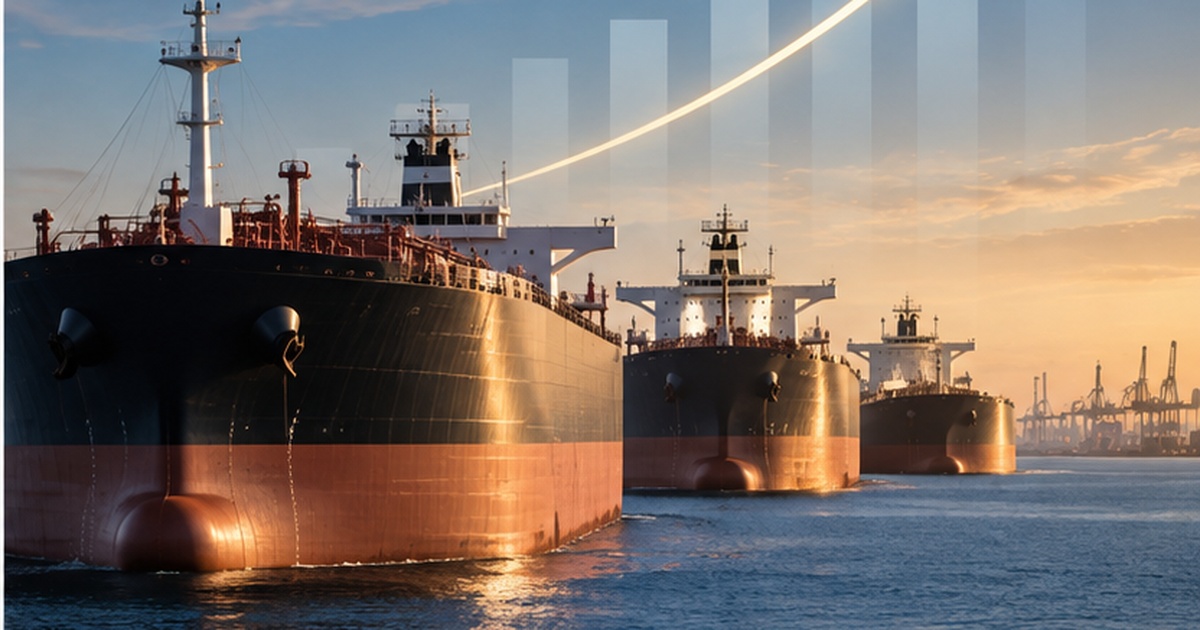
The tanker market is approaching an important turning point. After several years in which tight vessel supply, strong freight markets and an ageing fleet supported attractive returns, owners are now committing substantial capital to new tonnage. The scale of the ordering is significant.
Clarksons Research reported that more than 150 VLCCs had been ordered by the middle of 2026, while its broader data showed exceptionally strong shipbuilding activity across the global fleet.
The central question is no longer whether tanker owners are investing in fleet renewal. They clearly are. The more important question is whether this investment marks the beginning of a new tanker capacity cycle and, if so, what it could mean for freight markets, asset values and fleet strategy over the next several years.
A remarkable ordering cycle
The tanker industry's current ordering wave stands out because of both its speed and its concentration. According to Maritime Strategies International data reported in July, 177 VLCCs representing 54.5 million dwt were ordered during the first half of 2026 alone.
That exceeded the previous full-year record of 32.6 million dwt set in 2006. Around 83% of those vessels were scheduled for delivery in 2028 and 2029. The wider crude tanker picture is similarly striking. Drewry reported that 178 crude tankers, including 112 VLCCs and 63 Suezmaxes, were ordered during the first five months of 2026.
The crude tanker orderbook had consequently risen to around 25% of the existing fleet by May, compared with 16% at the end of 2025. This is not simply a reaction to a short-term shortage of ships. Ordering a tanker involves substantial capital, long construction lead times and a commitment to market conditions several years into the future.
That makes the current orderbook an important signal of how owners view the long-term fundamentals of the sector.
Why owners are ordering now
There are several reasons behind the renewed appetite for new tonnage. One is the age profile of the existing fleet. Many older tankers are becoming increasingly expensive to operate and maintain as regulatory, environmental and customer expectations rise.
A new vessel can offer better fuel efficiency, improved cargo-handling systems, lower maintenance requirements and greater operational reliability. Fleet renewal can therefore make commercial sense even when the headline freight outlook is uncertain.
Another factor is the length of the tanker investment cycle.
A vessel ordered today may not enter commercial service for several years. Owners making investment decisions are therefore looking beyond today's freight rates and considering what the fleet will look like towards the end of the decade. The ordering pattern also suggests that shipowners see continued demand for large crude carriers.
Clarksons Research noted that crude tanker contracting reached a record pace early in 2026, with more than 129 crude tankers contracted in the first quarter, including more than 81 VLCCs. The result is a significant expansion of potential future supply.
The delivery schedule matters
An orderbook should never be treated as an immediate increase in available capacity. The crucial variable is when the ships actually enter service. The current tanker orderbook is heavily weighted towards later delivery years.
Shipping Analytics' July review noted that the orderbook is concentrated in 2027 to 2029, meaning the immediate market remains relatively protected from a sudden increase in vessel supply. It also highlighted the very low level of tanker demolition during the period. This creates an interesting dynamic.
In the short term, the market can remain tight because the majority of newly ordered ships are still under construction. But as deliveries accelerate, the balance between fleet growth and cargo demand will become increasingly important. That means 2027 and 2028 could become particularly significant years for tanker owners, charterers and investors. The other side of the equation: scrapping Newbuilding numbers only tell half the story.
The tanker fleet can grow rapidly when deliveries exceed removals, but the opposite can happen when older vessels are sold for demolition at an accelerated rate. For much of the recent period, however, demolition has remained subdued.
Shipping Analytics reported only three tanker removals in June, including one product tanker, against a global tanker fleet of roughly 18,000 vessels.
That is important because the industry's current ordering surge could have a very different effect depending on what happens to older tonnage. If owners continue operating older ships for longer, newbuilding deliveries will translate more directly into net fleet growth. If large numbers of ageing vessels are recycled, part of the new capacity could simply replace existing tonnage rather than expand the trading fleet. The timing of this transition will therefore be critical.
Not all tanker segments face the same outlook
Another reason to be cautious about describing the situation simply as a "tanker capacity boom" is that supply dynamics differ considerably between vessel segments.
The VLCC market is currently experiencing the most dramatic ordering surge. Suezmaxes have also attracted substantial investment, while product tankers have a different supply and demand profile.
Affinity Shipping's Q3 2026 Orderbook Observer put the crude tanker orderbook at approximately 28% of fleet, driven by record VLCC and Suezmax contracting. The product tanker orderbook was just below 20% of fleet. The distinction matters because tanker markets are driven by different cargoes, routes, vessel sizes, refinery configurations and trading patterns.
A growing VLCC fleet does not necessarily create the same commercial pressure for an MR product tanker operator. Likewise, a strong product tanker market cannot automatically absorb additional crude tanker capacity. For owners, fleet composition will therefore be just as important as overall fleet growth.
What happens to freight rates?
The obvious concern is that a large influx of new vessels could eventually place downward pressure on freight rates. That does not necessarily mean a collapse. Tanker demand is influenced not only by the volume of oil and products transported, but also by the distance those cargoes travel. Longer voyages consume more vessel capacity and increase tonne-mile demand even when underlying cargo volumes grow more slowly.
BIMCO and S&P Global have identified tonne-mile growth, trade flows, vessel supply, recycling and crude inventories among the key factors shaping the tanker market outlook. This makes the capacity equation more complicated than simply comparing barrels with ships.
If demand expands at a pace that absorbs new vessels, the additional tonnage may have a limited effect on freight rates. If fleet growth substantially outpaces tonne-mile demand, however, utilisation could weaken and earnings could come under pressure. The critical issue is therefore fleet growth relative to effective demand, rather than the absolute number of new ships being ordered.
The asset market could change too
The consequences of a new capacity cycle will extend beyond freight rates. A growing supply of modern vessels could widen the gap between newer and older tankers. Modern vessels with better fuel performance, stronger environmental credentials and lower maintenance requirements may become increasingly attractive to charterers.
Older vessels could face higher operating costs and a narrower pool of employment opportunities. This could accelerate the two-speed nature of the tanker fleet.
Newer vessels may retain stronger chartering appeal and asset values, while older tonnage could face increasing pressure to enter specialised trades, undergo major upgrades or leave the fleet altogether.
In that environment, age alone will not determine a vessel's value. Its specification, efficiency, trading capability, maintenance history and regulatory readiness will increasingly matter.
The strategic response for owners
For tanker companies, the next phase will require more than simply ordering ships. Fleet timing will become crucial. Ordering too late could leave an owner with an ageing fleet and limited access to competitive newbuilding slots.
Ordering too aggressively could expose the company to weaker markets when vessels eventually enter service. This makes fleet renewal a question of capital allocation as much as fleet management. Owners will need to consider the balance between newbuildings, secondhand acquisitions, life-extension investment and recycling.
They will also need to assess the appropriate mix of vessel sizes and specifications rather than assuming that additional capacity automatically creates additional value. For charterers, a growing modern fleet could create greater choice and potentially improve access to efficient tonnage.
For shipyards, meanwhile, the tanker boom presents both an opportunity and a capacity challenge. Strong ordering can tighten construction slots, increase prices and push delivery schedules further into the future. The decisions being made today will therefore affect the competitive structure of the market well beyond the point at which today's orderbook is delivered.
Is this really a new capacity cycle?
The evidence suggests that the tanker industry is moving towards a new phase of fleet expansion. But it would be premature to conclude that a large orderbook automatically means a weak tanker market.
The current cycle has several moving parts. Newbuilding deliveries are concentrated in later years.
Demolition remains relatively low.
Demand is influenced by both cargo volumes and tonne-mile development. And the existing fleet is ageing, creating a substantial underlying need for renewal. The more likely outcome is a gradual change in market dynamics rather than an immediate reversal.
The tanker industry could move from a period in which vessel scarcity was a dominant market feature towards one where fleet quality, timing and commercial positioning become increasingly important. That distinction will matter. A growing fleet does not necessarily eliminate opportunity. It changes where the opportunity lies.
The next test for tanker shipping
The next few years will provide a test of whether today's ordering boom represents prudent fleet renewal or the early stages of a capacity overshoot. For owners, the challenge will be to ensure that new tonnage enters the market at the right time, with the right specifications and supported by sustainable commercial demand.
For charterers, the expanding fleet could create more choice, but also a more complex market in which vessel quality and efficiency become increasingly important. For investors and analysts, the key indicators will be clear: newbuilding deliveries, recycling rates, fleet growth, tonne-mile demand, vessel utilisation and the evolution of secondhand values.
The tanker market has spent much of the recent cycle dealing with tight capacity and an ageing fleet. It may now be preparing for something different. The next competitive advantage may not come simply from having more ships. It may come from having the right ships, delivered at the right time, deployed into the right markets.

Gold sponsor

Gold sponsor

Silver Sponsor

Lanyards and Badges
Multimedia sponsor
Multimedia sponsor
Delegate Lunch

Conference Registration

Silver Sponsor
Gold sponsor
Gold sponsor
Silver Sponsor
Lanyards and Badges
Multimedia sponsor
Multimedia sponsor
Delegate Lunch
Conference Registration
Silver Sponsor
Gold sponsor
Gold sponsor
Silver Sponsor
Lanyards and Badges
Multimedia sponsor
Multimedia sponsor
Delegate Lunch
Conference Registration
Silver Sponsor
Gold sponsor
Gold sponsor
Silver Sponsor
Lanyards and Badges
Multimedia sponsor
Multimedia sponsor
Delegate Lunch
Conference Registration
Silver Sponsor
Gold sponsor
Gold sponsor
Silver Sponsor
Lanyards and Badges
Multimedia sponsor
Multimedia sponsor
Delegate Lunch
Conference Registration
Silver Sponsor
Gold sponsor
Gold sponsor
Silver Sponsor
Lanyards and Badges
Multimedia sponsor
Multimedia sponsor
Delegate Lunch
Conference Registration
Silver Sponsor

Advance Polymer

Main Session

General Sponsor

Delegate Bags

Gulf Energy Marine

General Sponsor
General Sponsor

General Sponsor
Advance Polymer
Main Session
General Sponsor
Delegate Bags
Gulf Energy Marine
General Sponsor
General Sponsor
General Sponsor
Advance Polymer
Main Session
General Sponsor
Delegate Bags
Gulf Energy Marine
General Sponsor
General Sponsor
General Sponsor
Advance Polymer
Main Session
General Sponsor
Delegate Bags
Gulf Energy Marine
General Sponsor
General Sponsor
General Sponsor
Advance Polymer
Main Session
General Sponsor
Delegate Bags
Gulf Energy Marine
General Sponsor
General Sponsor
General Sponsor
Advance Polymer
Main Session
General Sponsor
Delegate Bags
Gulf Energy Marine
General Sponsor
General Sponsor
General Sponsor































Sign up for our newsletter to get the latest waves of updates, insights, and exclusive conference content.
Sign up for our newsletter to get the latest waves of updates, insights, and exclusive conference content.
© TMS Marine Conference 2026. Designed & Developed by Cheval
Back to Top